India's AI talent shortage leaves 10% of critical jobs unfilled as demand surges 660%


9 Sources
[1]
More than 10% AI solutions and machine learning engineer jobs in India waiting to be filled: Randstad Digital report
India faces a significant AI talent crunch, with one in ten AI solutions lead and machine learning engineer job postings unfilled. While India holds a fifth of global AI job openings, the primary challenge is a shortage of advanced skills, not a lack of people. AI-augmented developer roles have
[2]
Talent shortage slows AI project progress beyond pilot stages
India faces a looming AI talent crisis, with projections indicating a shortage of over a million professionals by 2027. Companies are struggling to move AI projects beyond pilot phases due to a significant gap in skilled workers, particularly in deployment roles. This demand-supply imbalance is
[3]
What Indian Employers Actually Want from AI Talent in 2026
On-the-job learning and self-driven upskilling are emerging as the primary pathways into AI careers According to a joint report by Indeed & Nasscom, 50% of employers prioritise demonstrated AI capabilities over formal degrees, signalling a clear move towards a skills-first hiring approach. The
[4]
AI startups fuel talent war as hiring surges across India
India's AI startups are experiencing a hiring surge, outpacing the broader tech sector as companies transition from AI experiments to large-scale deployments. Driven by demand for generative AI and automation, recruitment is booming across engineering, product, and customer-facing roles. This
[5]
Beyond Coding: 25% of India's AI Learners Now Hail from Non-Tech Backgrounds
Based on insights from 11,444 professionals, the report highlights how AI is reshaping India's workforce. With AI moving from experimentation to everyday adoption across the world, it is no longer a tool only for software engineers and technology teams. According to the newly released 'India AI
[6]
AI, AI Sir! Indian execs back in the classroom for a fresh chapter
Online education companies such as Coursera, Eruditus, upGrad and Simplilearn are reporting a sharp rise in enrolments over the past year $2 trillion a year over the next five years - with generative AI, agentic AI and AI-led business transformation emerging as the most sought-after areas of
[7]
As Enterprise AI Shifts from Pilots to Production, India's Hiring Demand Hits 350K
Quess Report Governance, Runtime Operations and Evaluation Account for More Than a Quarter of Agentic AI Hiring Demand Quess Corp has released its India AI Workforce Analysis 2026. The report is a workforce intelligence study that maps how artificial intelligence is reshaping India's enterprise
[8]
Bengaluru, Pune, Hyderabad, Mumbai and Chennai dominate India's AI talent map: Report
Nearly one in five AI learners comes from Tier II cities such as Lucknow, Patna, Jaipur, Indore, Nagpur, Chengalpattu and Coimbatore, according to Scaler's India AI Workforce Report 2026, a study of career outcomes among India's AI-skilled workforce. Bengaluru, Pune, Hyderabad, Mumbai and Chennai
[9]
India has wide AI talent gaps in deployment, governance, security: Quess report
India faces significant AI talent gaps in deployment, governance, and security roles, with GenAI deployment showing the widest deficit. While the country boasts the second-largest AI talent pool globally, the demand is shifting towards production-ready skills, particularly in the three-to-five-year
Share
Copy Link
India confronts a severe AI talent crunch, with one in ten AI solutions and machine learning engineer positions remaining vacant despite holding a fifth of global AI job openings. The shortage of advanced skills, not people, is hampering companies as they transition from AI experimentation to full-scale implementation, with demand for AI-skilled developers skyrocketing 660% by early 2026.
India Holds 20% of Global AI Jobs But Struggles With Critical Vacancies
India's position as an AI powerhouse faces a significant challenge as the AI talent shortage intensifies across the country. According to the latest Randstad Digital report analyzing over 35 million global job postings, one in ten AI solutions and machine learning engineer jobs in India remain unfilled
1
. AI Solutions Leads carry vacancy rates of 10.3% in India, while Machine Learning engineers face an 11.2% vacancy rate—figures that represent a massive talent crisis when exceeding the 10% threshold .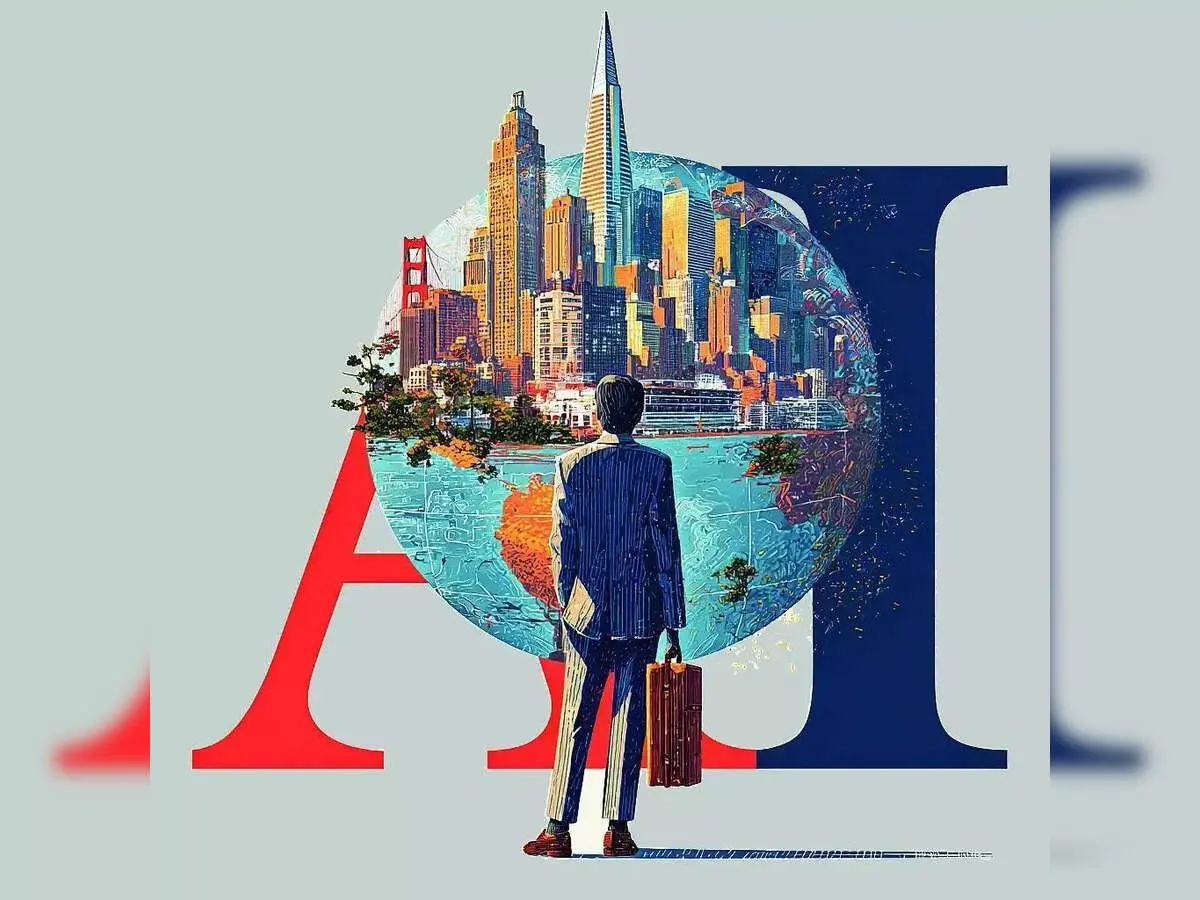
Source: ET
Despite India accounting for 20.5% of all AI jobs India postings globally—second only to the US at 29%—the country grapples with a fundamental issue. "India is a global powerhouse, holding one-fifth of all AI job openings worldwide. However, our biggest challenge right now is not a lack of people, it is a shortage of advanced skills," said Milind Shah, managing director at Randstad Digital India . The AI skills gap has become the primary bottleneck preventing organizations from scaling their AI initiatives.
Shortage of AI Professionals Could Reach 1 Million by 2027
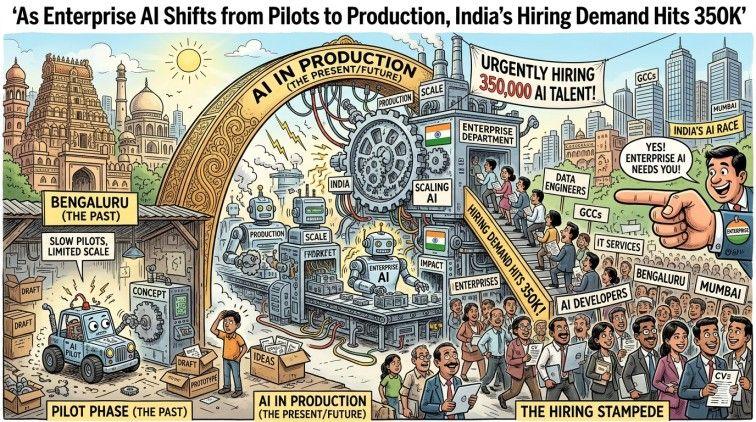
The demand-supply imbalance is projected to worsen dramatically. India could face a shortage of more than 1 million AI professionals by 2027, with demand for AI talent expected to reach 2.3 million against an available talent pool of just 1.2 million
2
. "India is already facing a structural gap of nearly 900,000 AI professionals," said Kapil Joshi, CEO-IT staffing at Quess Corp, noting that nearly 350,000 AI-related jobs were advertised in the last 90 days alone2
.
Source: CXOToday
The shortage is most severe in production and deployment-focused roles, with generative AI talent facing a gap of nearly 83%
2
. According to staffing firm Adecco India, there is currently only one qualified engineer available for every ten open roles in generative AI2
. Around 80% of employers are struggling to find the AI workforce they need, while hiring timelines for niche AI roles have stretched beyond 90 days2
.Demand for AI-Skilled Developers Explodes 660% as Implementation Accelerates
As enterprises transition from AI experimentation to implementation, the demand for AI-skilled developers has skyrocketed. AI-augmented developer roles globally have surged 597% since 2021, compared to just 28% for traditional developers
1
. In India specifically, the need has increased more than 660% by early 20261
.This surge reflects a fundamental shift in how companies approach AI. The AI talent hiring pressure is increasingly affecting organizations' ability to move AI project deployment beyond pilot stages and into full-scale deployment
2
. "The challenge is no longer AI awareness but production-ready capability," Joshi noted. "While many professionals have AI exposure, only a small percentage can build and deploy enterprise-grade AI systems at scale"2
.AI Startups Drive Aggressive Hiring as Compensation Soars
AI startups are experiencing a hiring surge that outpaces the broader tech sector. Jobs platform foundit reported that AI startups saw a 21% year-on-year rise in hiring as of May, far surpassing the broader startup ecosystem's 12% growth
4
. Executive search firm Fidius Advisory is seeing a 35-40% jump in mandates from AI startups4
.The talent crunch is driving substantial salary premiums. Core AI professionals are commanding compensation increases of 30-40%, while specialized generative AI engineers, AI architects, and domain-focused AI talent can attract premiums of 50% or more
2
. Annual cash compensation ranges from approximately Rs 25 lakh for early-career AI engineers to Rs 1 crore for senior individual contributors, with leadership hires commanding packages of Rs 1.5 crore and more . Global Capability Centers have emerged as one of the biggest demand drivers, accounting for more than 60% of AI-related hiring demand2
.Related Stories

Skills-First Hiring Transforms AI Recruitment Landscape
The approach to AI talent hiring is shifting dramatically. According to a joint report by Indeed and Nasscom, 50% of employers prioritize demonstrated AI capabilities over formal degrees, signaling a clear move towards skills-first hiring
3
. AI capability is increasingly being developed outside formal education, with 32% of professionals building these skills on the job, 24% through self-learning, and 17% through peer learning3
.The top six skills shaping AI careers include Cloud & Infrastructure Integration (38% of employers prioritizing it), Generative AI & LLMs (37%), MLOps & Deployment (32%), Data Analytics & Visualization (32%), AI Ethics & Governance (29%), and Human-AI Collaboration Design (28%)
3
. The focus on MLOps & Deployment reflects a clear shift from building models to operationalizing them, as employers seek talent that can deploy, monitor, and scale AI systems reliably3
.AI Upskilling Opens Pathways Beyond Traditional Tech Roles
Source: CXOToday
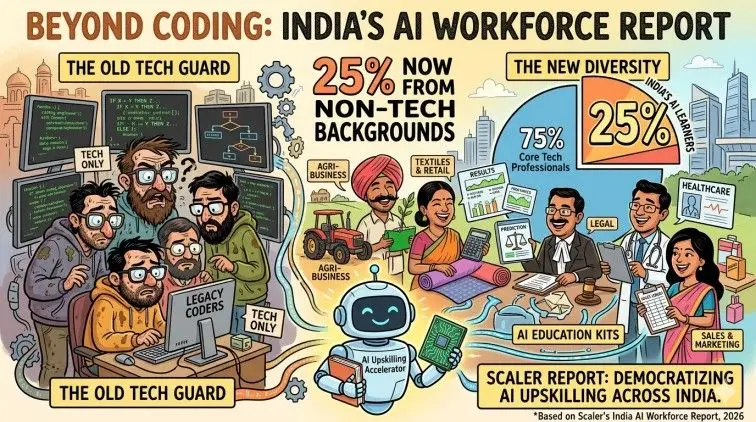
The India AI Workforce Report 2026 by Scaler, based on insights from 11,444 professionals, reveals that AI upskilling is democratizing access to high-growth careers. Nearly 25% of AI learners now come from non-tech backgrounds, signaling AI's growing relevance beyond engineering careers
5
. Nearly 50% of AI-enabled career outcomes now lie outside traditional engineering roles, spanning leadership, consulting, HR, marketing, finance, and academia5
.AI upskilling delivered significant career progression gains, with professionals reporting an average salary increase of 147% and early-career professionals seeing growth of 155%
5
. Women reported an average 145% salary jump after transitioning into AI-enabled careers5
. Bengaluru continues to lead India's AI talent landscape with 19%, followed by Pune, Hyderabad, Mumbai and Chennai, while nearly one in five AI learners now comes from Tier-II cities such as Lucknow, Jaipur, Patna, Indore, and Coimbatore5
.As organizations across sectors ramp up investments in AI, the ability to demonstrate hands-on experience building and deploying AI-powered tools has become more valuable than traditional credentials. The next phase of India's AI growth will depend on closing this widening gap between supply and the accelerating need for production-ready AI talent.
References
Summarized by

Navi
Related Stories
India's AI Sector Faces Talent Crunch: 2.3 Million Job Openings Expected by 2027
11 Mar 2025•Business and Economy
India's Tech Sector Faces 53-60% Talent Gap in GenAI and Cloud Skills as AI Demand Soars
29 Sept 2026•Business and Economy

AI Skills Demand Explodes 17-Fold in India, But Workers Face a Pay Gap Paradox
16 Jul 2026•Business and Economy

Recent Highlights


Recent Highlights
Today's Top Stories









Don’t drown in AI news. We cut through the noise - filtering, ranking and summarizing the most important AI news, breakthroughs and research daily. Follow topics that matter to you and stay ahead.


